The Calendar Scheduler functions like Calendly, and it syncs with your calendar when you connect your email. This guide will cover how to create a calendar scheduling page, specify booking flows, set up reminders, and even add custom fields.
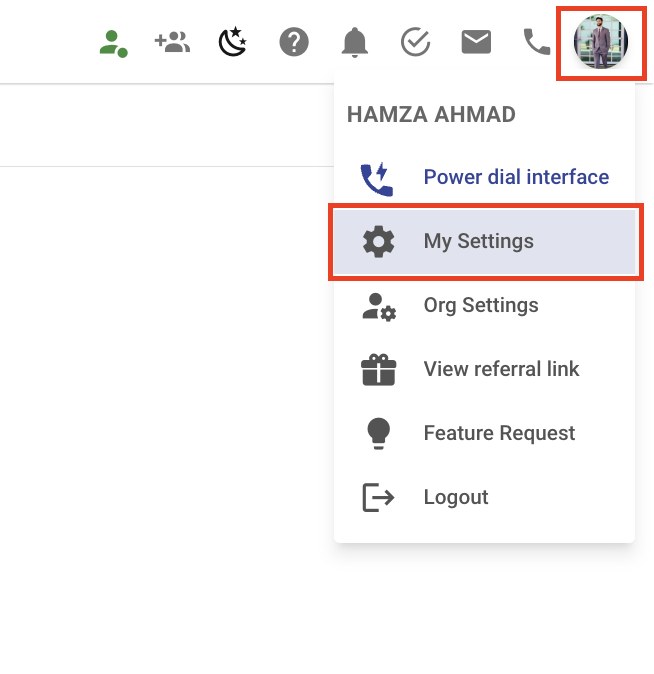
Click on your initials at the top right corner of the page and select "My Settings". In the settings menu on the left, select "Scheduling pages" under "Calendar". If you have more than one mailbox connected, pick the mailbox whose scheduler you want to manage.
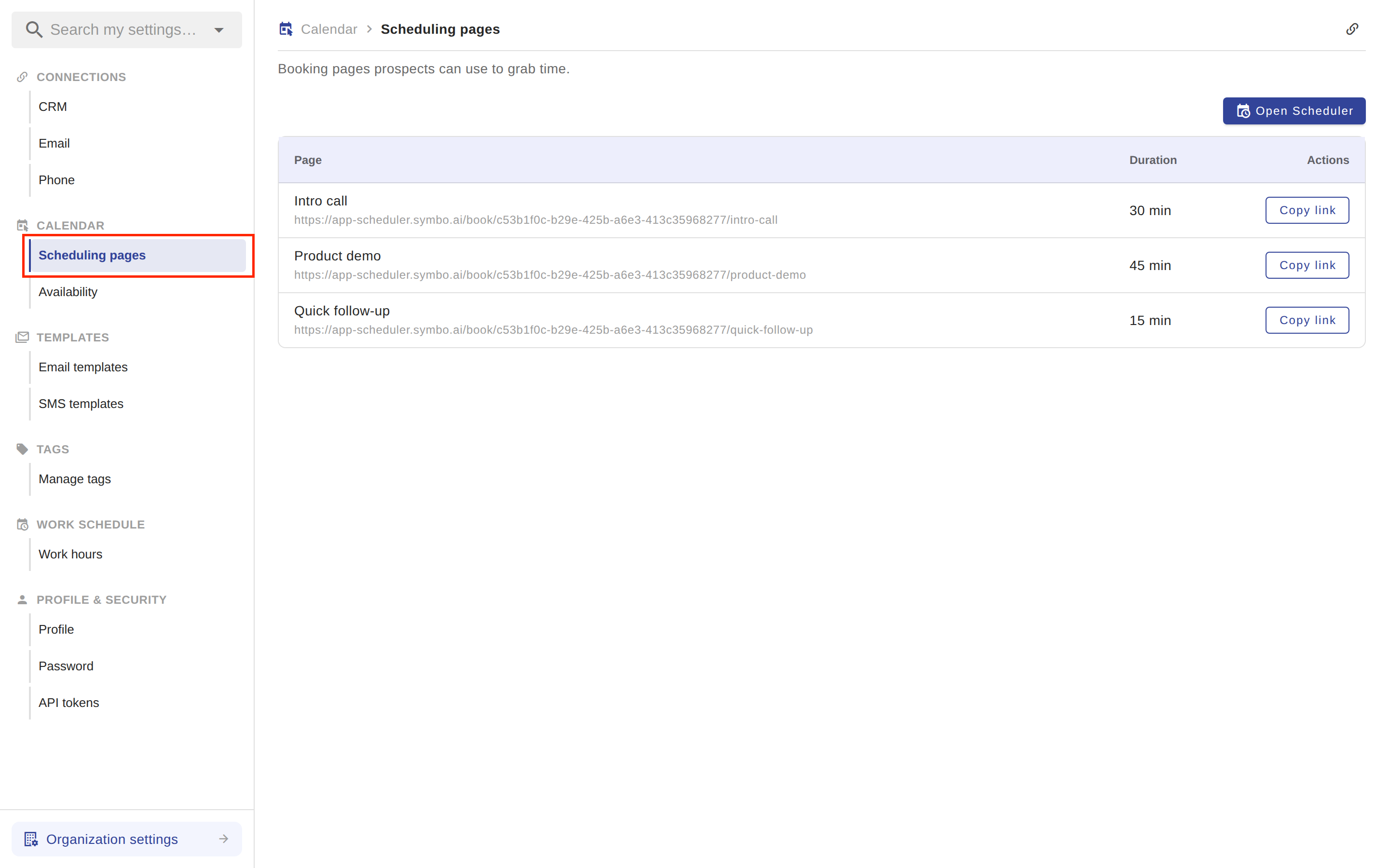
Click "Open Scheduler". The scheduler editor opens in a new tab, where you manage all of your scheduling pages.
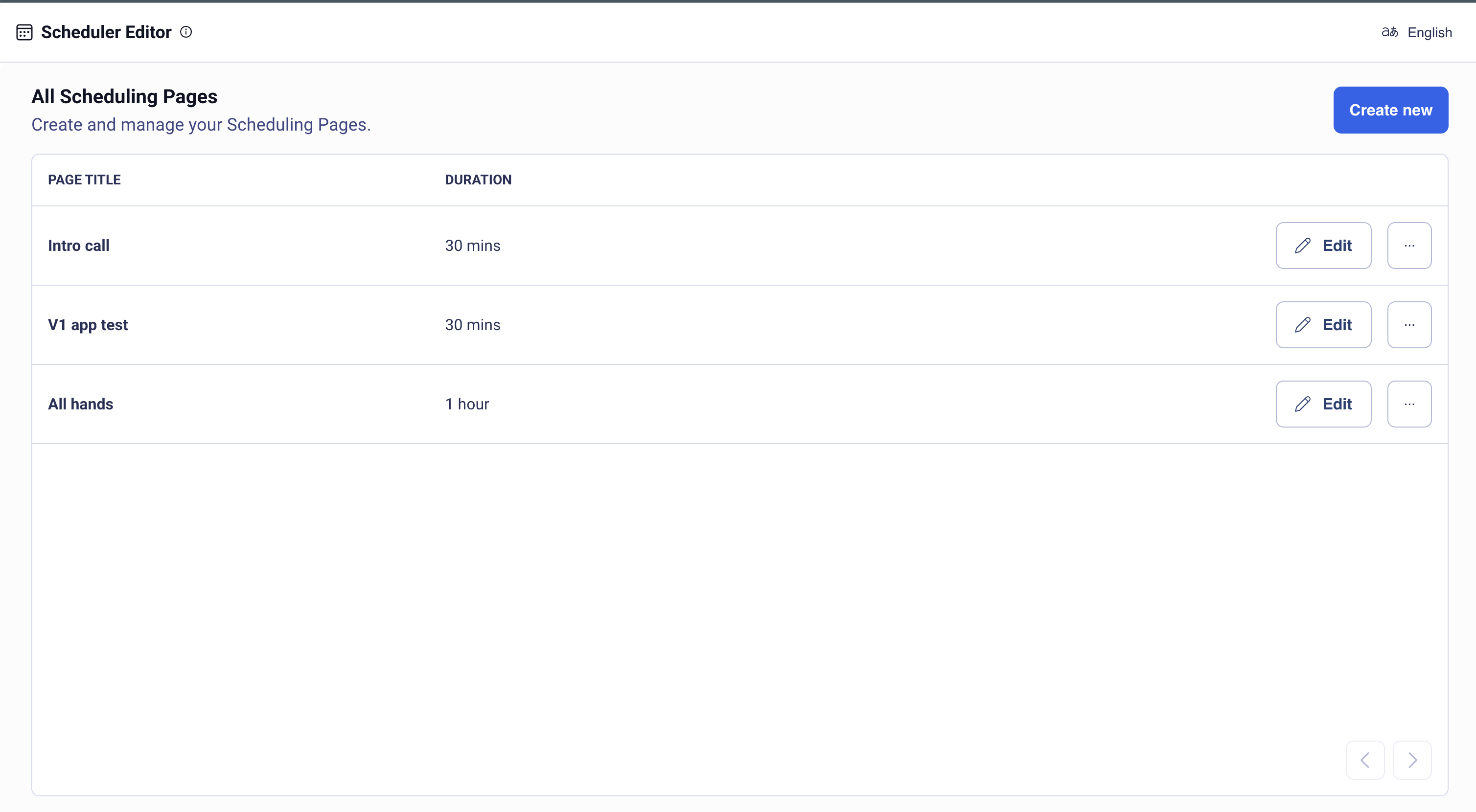
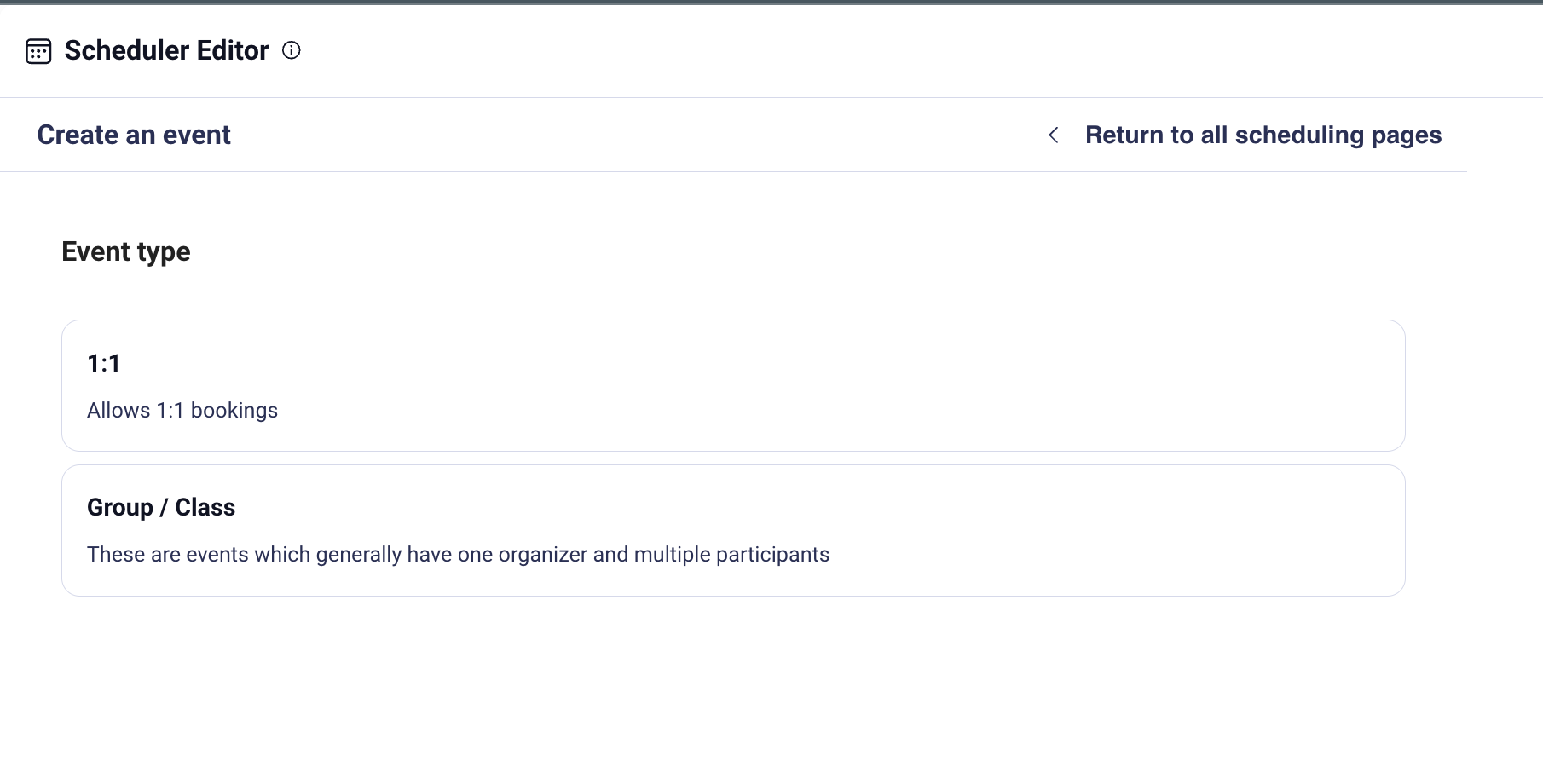
Click "Create new" to start creating your page and select the event type. You'll also be asked for a page slug — this is required, and it becomes part of your booking page's link.
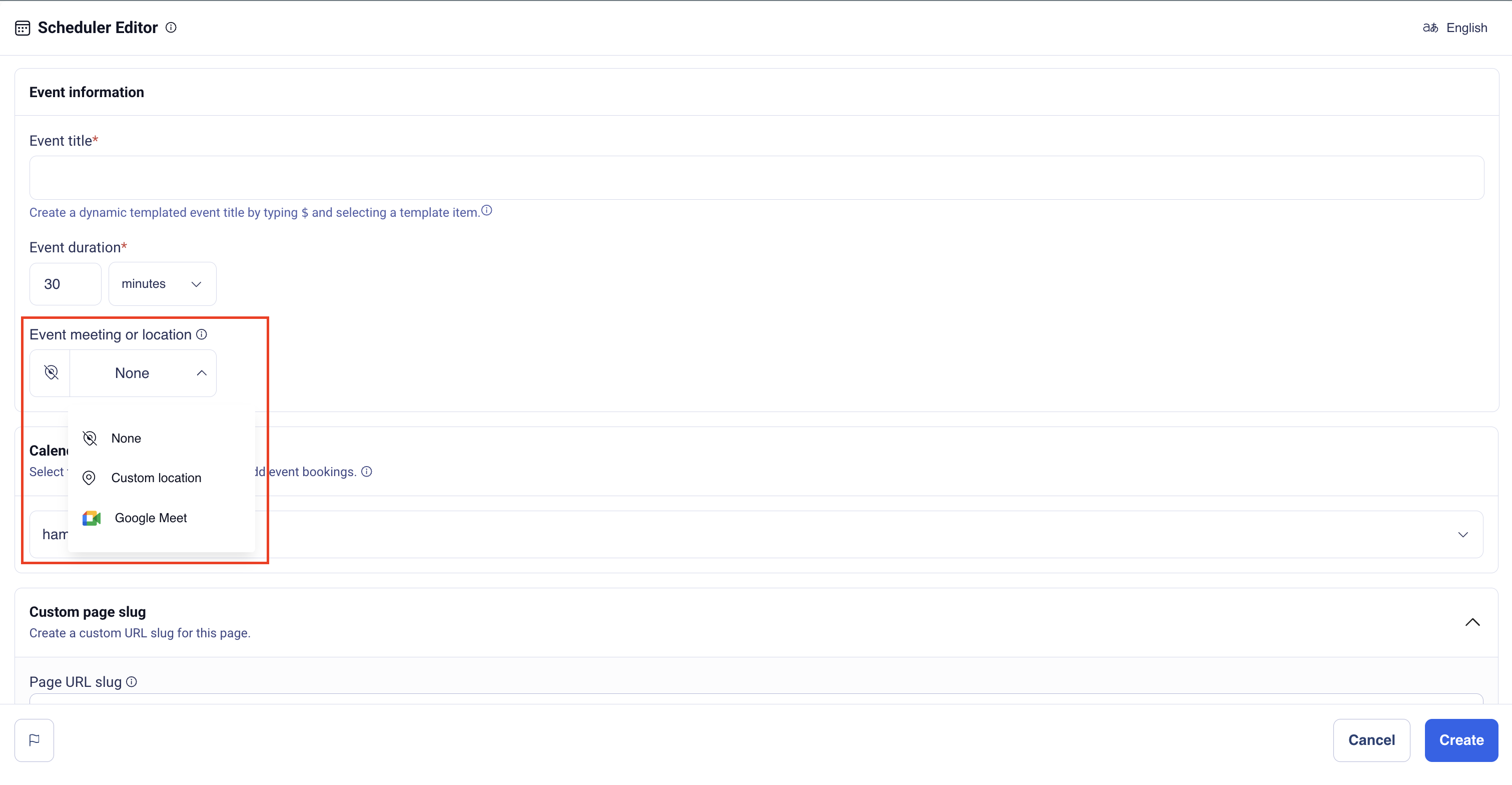
Give your meeting event a name, specify the location of where events will take place (e.g., Zoom, Google Meets, Teams), and decide how long each event will be.
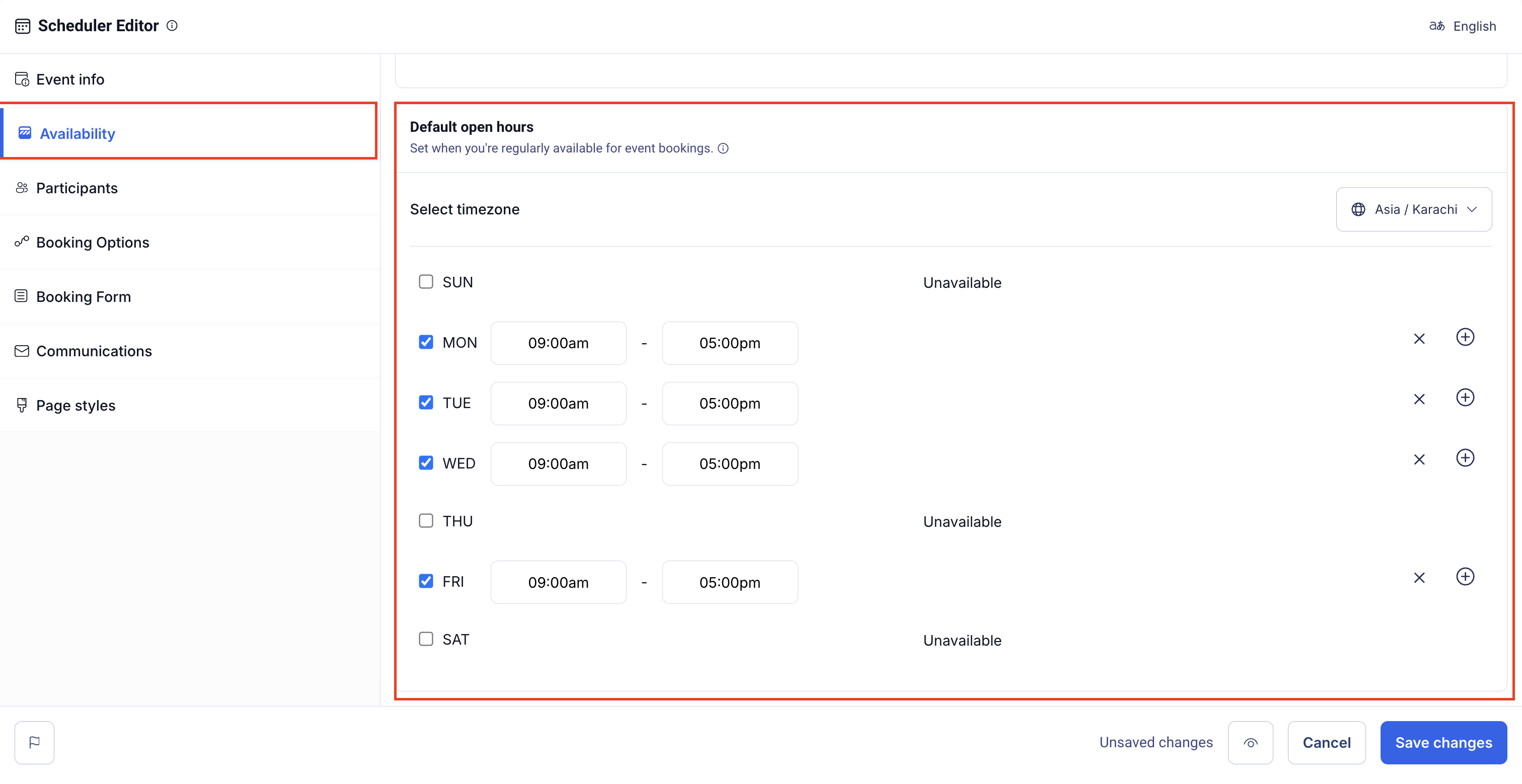
Once your event is created, click "Availability" in the page editor's left menu and scroll down to the open hours section. This is where you specify the booking times prospects can pick throughout the week. For example, if you don't work Mondays, this is where you can block those times off.
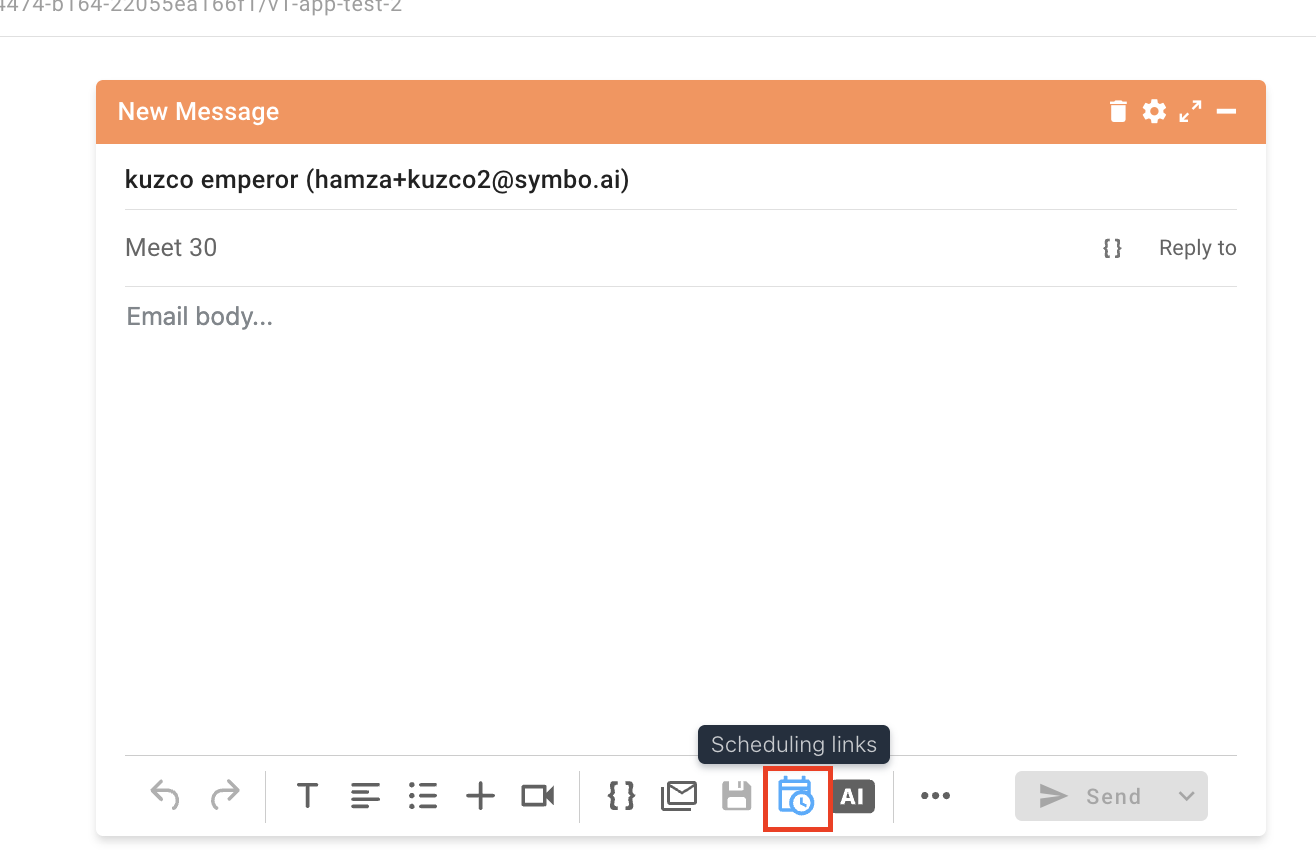
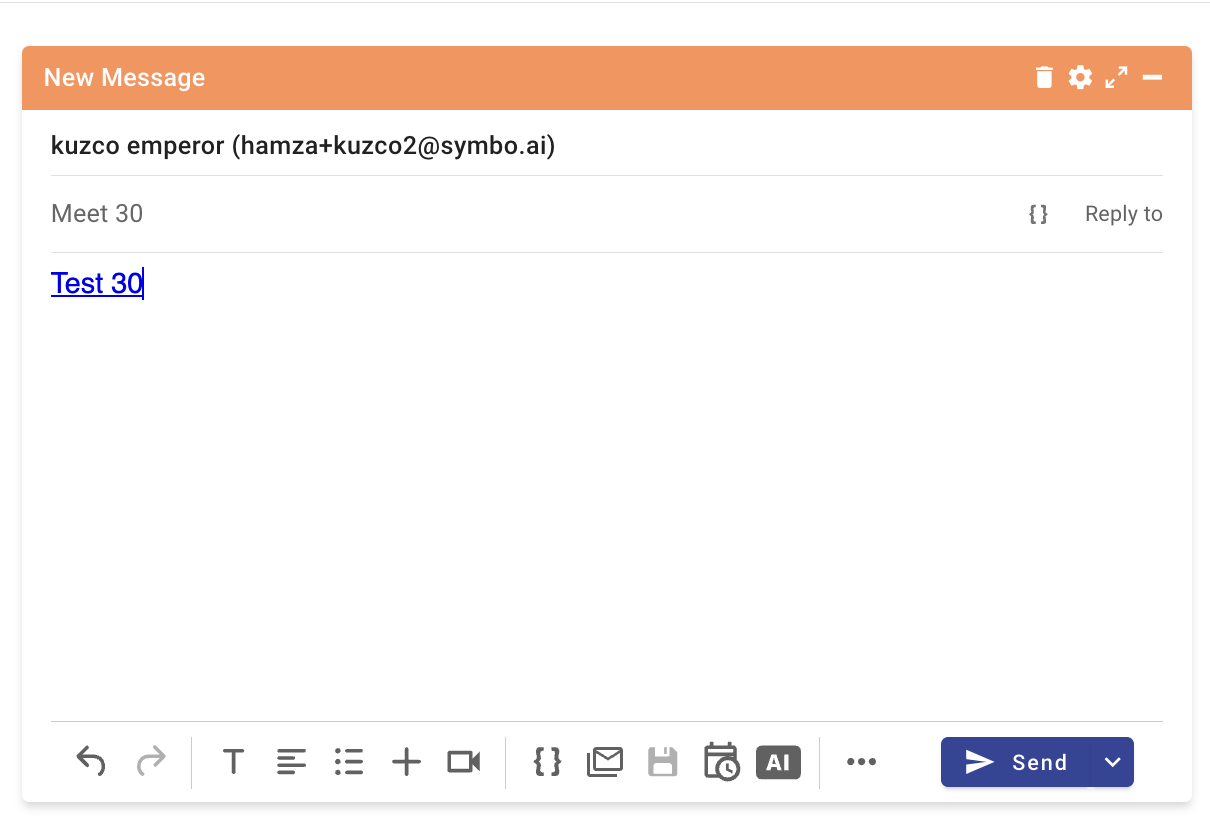
Inside email composer, click on Scheduling links in the bottom toolbar:
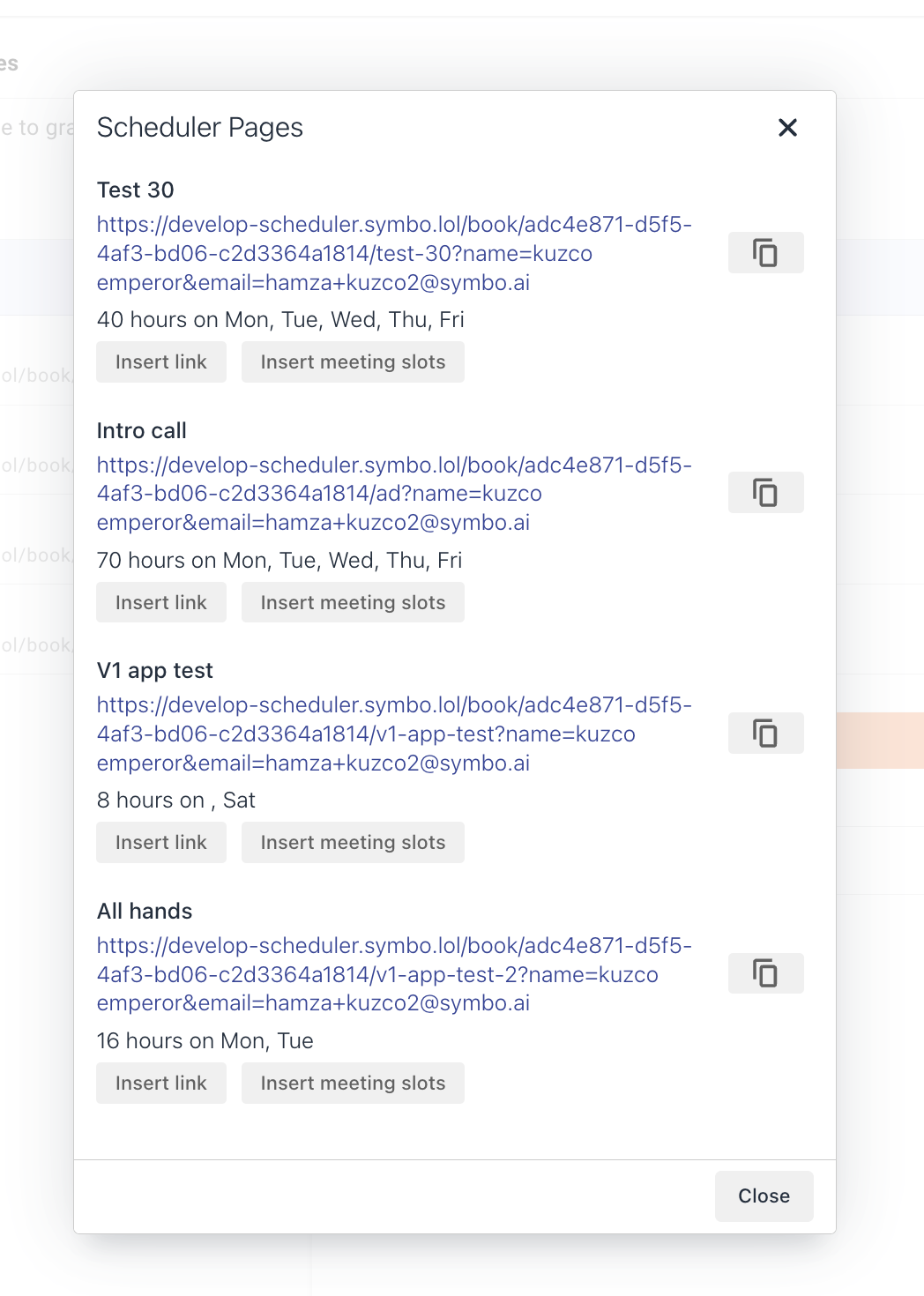
This opens a list of the scheduling pages you setup. Click on Insert link or Insert meeting slots to insert the scheduling page in the email. Prospects can click on these and book meetings.
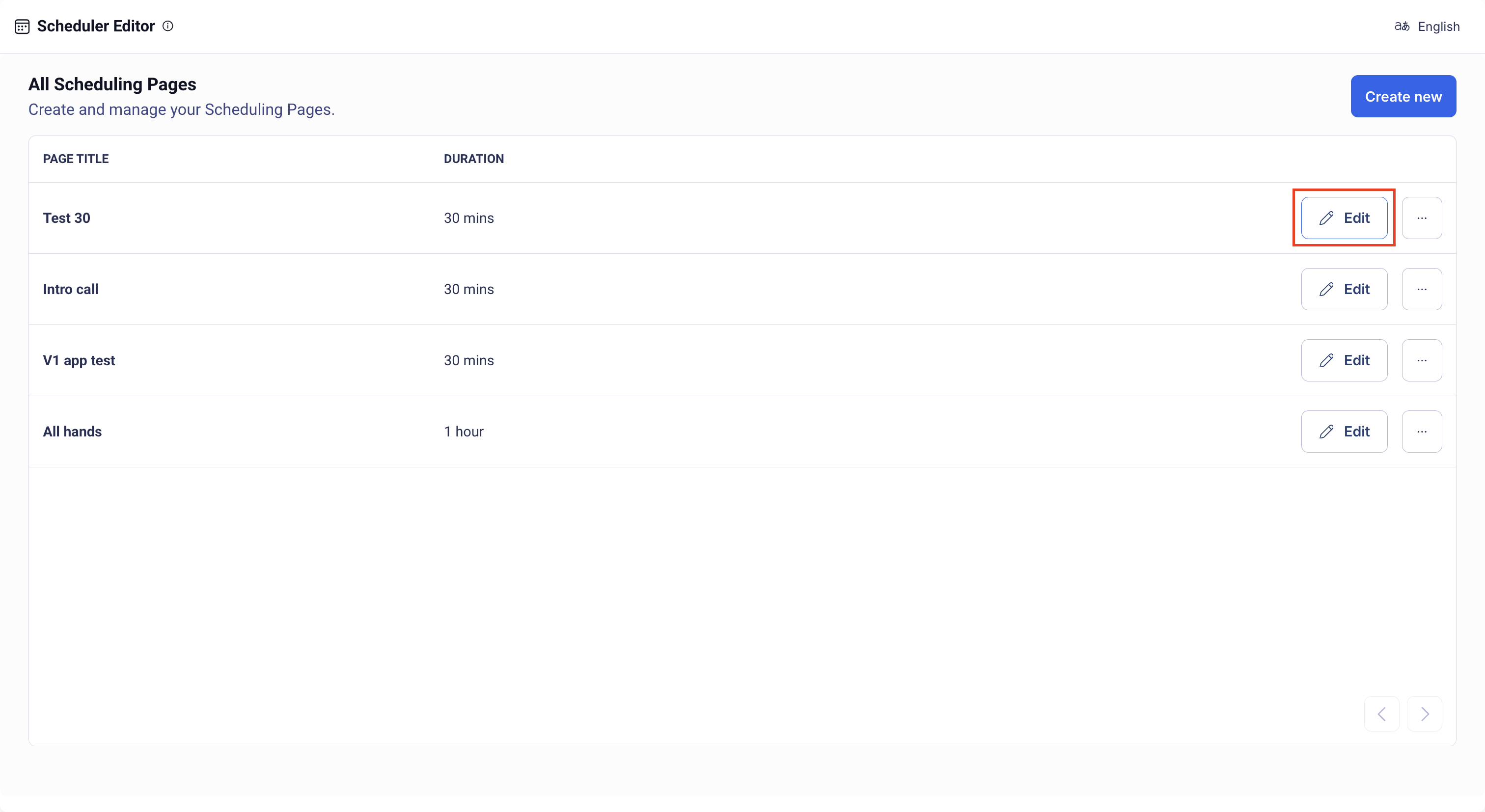
Once you've created your page, you can go back and edit it further. Use the left hand menu to specify booking flows, set up reminders, and add custom fields.
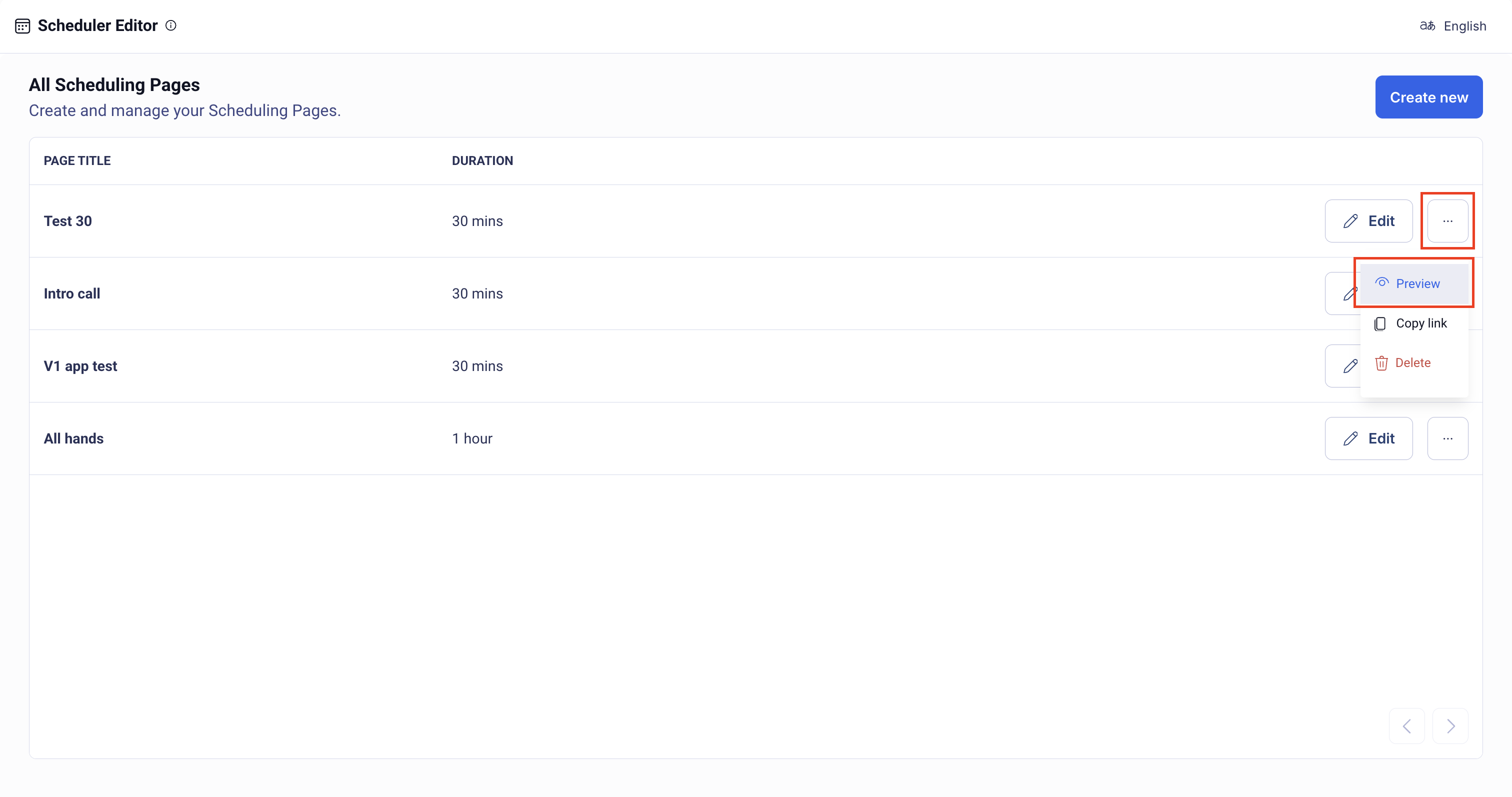
Save and exit, then click "View" to see your prospect-facing calendar. Your company logo will be at the top right corner of the page. Your availability will show up, and if you have meetings throughout the day, those time slots will automatically be blocked off so you don't get double booked.
Once a prospect selects a time that works best for them, they confirm and fill out the appropriate information before clicking "submit". Then you both are sent a confirmation email.
In summary, this guide has provided step-by-step guidance on how to set up a Calendar Scheduler and customize it to suit your needs. Need help? Reach out to us at [email protected] or start a chat with us from the help widget in Symbo.
